Data Protection Practices Across UK Gambling Operators: BetVictor and Casumo Methods
Mia Wolf · Aug 25, 2026
Data Protection Practices Across UK Gambling Operators: BetVictor and Casumo Methods
Operators in the British sports betting and casino sectors handle large volumes of user information daily, and data protection standards have evolved to address those demands through structured policies and technical controls. BetVictor and Casumo represent two platforms that apply different but overlapping strategies to meet requirements under the UK GDPR and related legislation, while researchers continue to track how those strategies align with broader European frameworks.
Core Requirements for Data Protection in British Gambling
British operators must comply with rules that govern collection, storage, and sharing of personal data, including details on payment methods, betting history, and account verification documents. These rules stem from legislation that mandates explicit consent, data minimisation, and secure processing, and figures from industry reports indicate that most platforms now encrypt data both in transit and at rest. Observers note that sports betting platforms often process real-time location data for regulatory checks, whereas casino sites focus more on transaction monitoring, yet both categories face the same baseline obligations for breach notification within 72 hours.
BetVictor Implementation Details
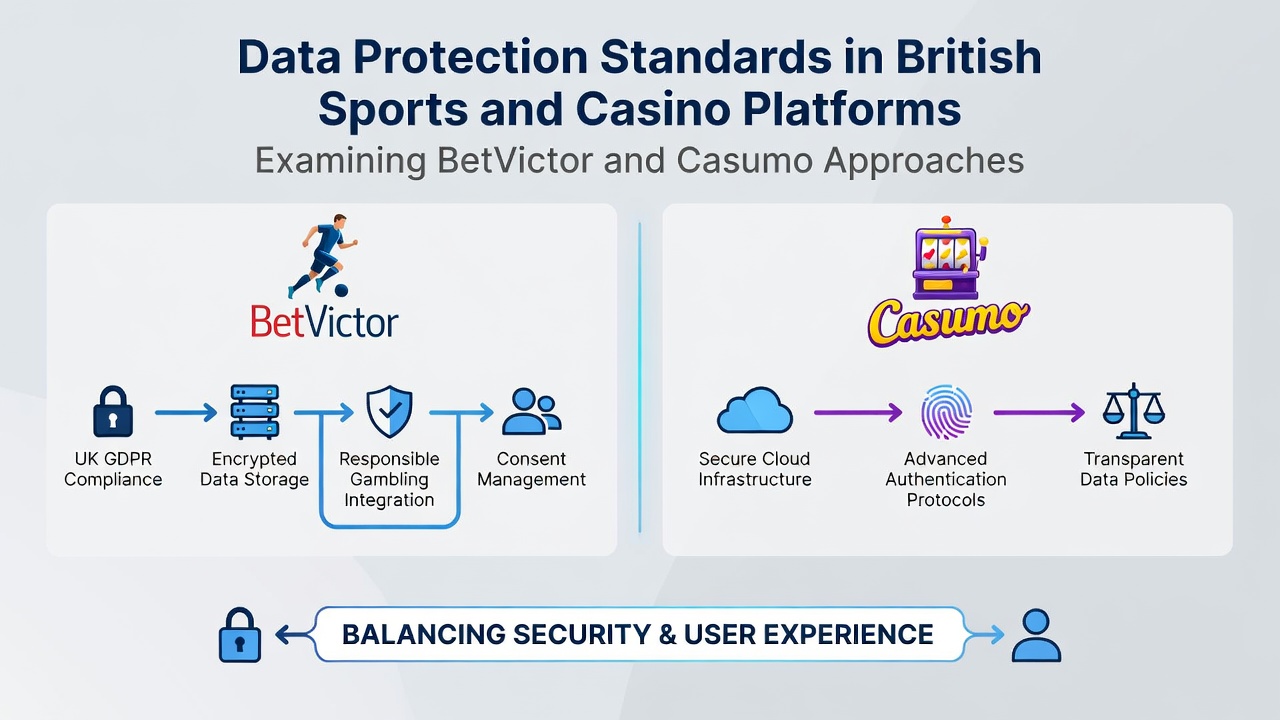
BetVictor maintains a layered approach that combines automated monitoring systems with manual review protocols for high-risk accounts. The company stores user data in segmented servers located within the European Economic Area, and access logs show that only authorised personnel can retrieve full customer profiles. According to documentation released by the operator, BetVictor runs quarterly audits that test encryption strength and deletion schedules, while routine checks verify that third-party analytics tools receive only anonymised aggregates rather than raw identifiers. Those who have examined the platform's infrastructure report that BetVictor integrates privacy-by-design principles during new feature rollouts, such as when adding live streaming options that capture additional device information.
Casumo Data Handling Framework
Casumo structures its data protection programme around a central privacy team that coordinates with product development squads to embed safeguards early in the lifecycle of each feature. The operator uses pseudonymisation techniques for player behaviour analytics and maintains separate databases for marketing preferences and gaming activity. Reports indicate that Casumo provides users with granular consent toggles that allow individuals to limit data use for personalised offers, and the platform deletes inactive accounts after a defined retention window unless legal holds require longer storage. External reviews have highlighted that Casumo conducts regular penetration testing in partnership with independent firms, and the results feed into updated risk registers that guide future investments in security tooling.
Points of Comparison Between the Two Operators
Both platforms publish transparency reports that detail the number of data subject requests received each year and the average response time, yet their internal architectures differ in emphasis. BetVictor places heavier weight on real-time fraud detection that correlates betting patterns with payment data, while Casumo invests more visibly in user-facing tools that let players download and review their own records. Researchers have observed that the two operators employ similar vendor management processes when engaging payment processors or marketing partners, requiring contractual clauses that specify data handling limits and audit rights. In August 2026, several European regulators published updated guidance on cross-border data transfers that prompted both companies to review their existing agreements with non-UK service providers.

Industry Context and External Benchmarks
Data from the European Data Protection Board shows that gambling operators across member states received increasing volumes of access requests between 2024 and 2026, reflecting greater user awareness of privacy rights. A study published by the University of Toronto's Citizen Lab examined encryption practices among online gaming services and found that platforms with dedicated privacy engineering teams achieved faster remediation of identified vulnerabilities. Those findings align with patterns noted by the Office of the Privacy Commissioner of Canada, which has tracked similar trends among operators licensed in multiple jurisdictions. Industry associations such as the Remote Gambling Association have issued voluntary codes that encourage members to exceed minimum statutory requirements, and both BetVictor and Casumo participate in those initiatives.
Emerging Developments Expected After August 2026
Regulators in several jurisdictions have signalled that forthcoming rules will require more detailed logging of algorithmic decision-making in responsible gambling tools, and operators are preparing by mapping data flows that feed into those systems. BetVictor has begun pilot projects that apply differential privacy techniques to aggregate reports shared with research partners, while Casumo has expanded its use of secure multi-party computation for joint fraud detection efforts with other licensed entities. These steps respond to guidance issued by the Australian Information Commissioner on privacy-enhancing technologies and demonstrate how platforms adapt technical measures to meet evolving expectations.
Conclusion
Data protection standards in British sports and casino platforms continue to develop through a combination of statutory obligations, technical innovation, and cross-industry collaboration. BetVictor and Casumo illustrate two distinct but effective pathways that address core requirements around consent, security, and user rights, and their ongoing adjustments to new guidance illustrate the dynamic nature of compliance in this sector. Observers expect further refinements as regulators finalise rules on automated processing and international transfers in the months following August 2026.